Experience Builds

Your business has grown. The experience behind it should too.

I build the part that holds the experience together: client onboarding, customer communication, delivery, portals, workflows, follow-up, and the business systems behind all of it. The goal is a better customer experience and a cleaner way for the work to move without everything landing back on you.

The right build depends on how the business is structured today. That’s what determines whether we’re building for a solopreneur-led business or a business with multiple people, roles, programs, and experiences to connect.
Strategy Architecture Build Migration 30 days of launch support
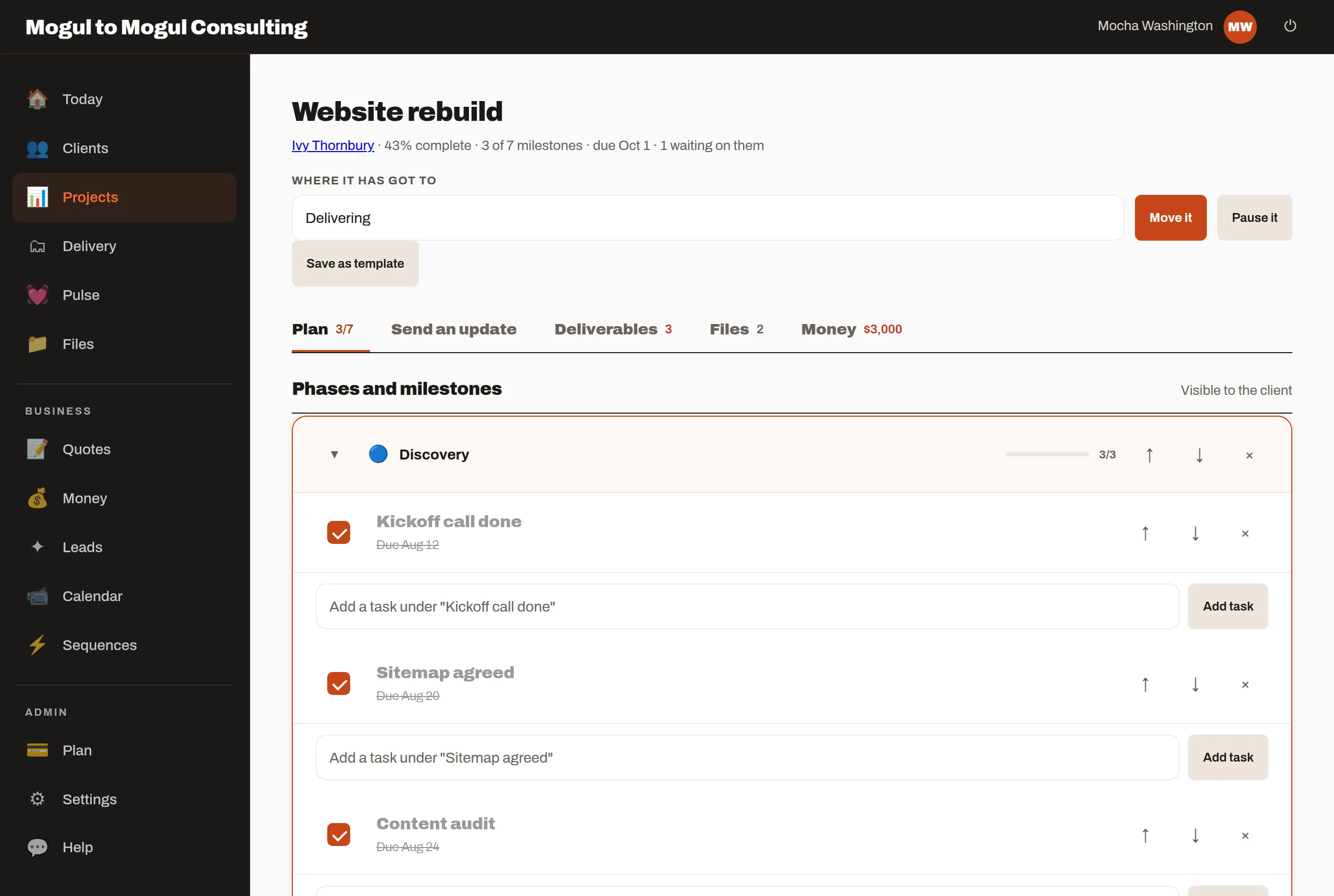
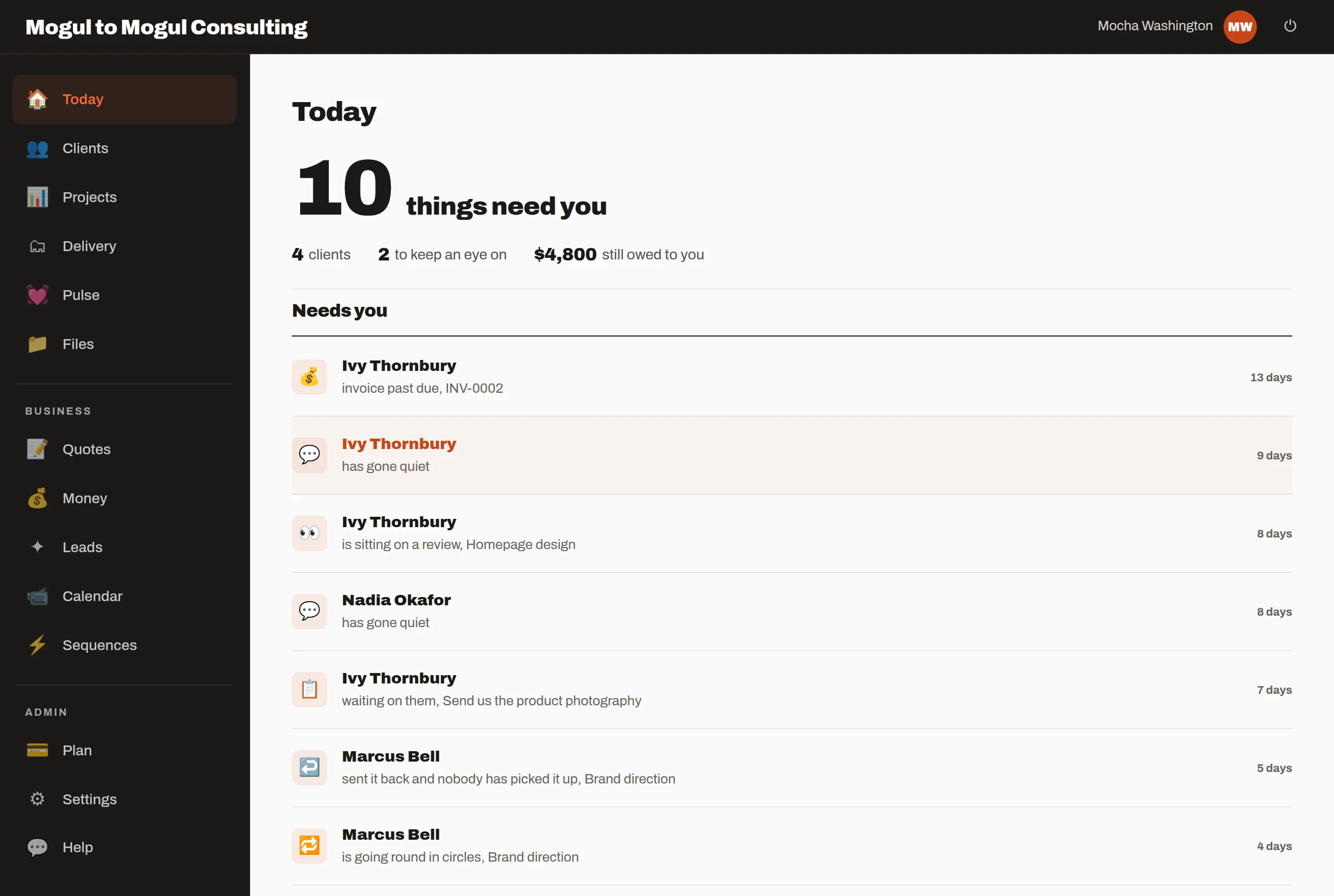
A client operations dashboard showing everything that needs the owner today
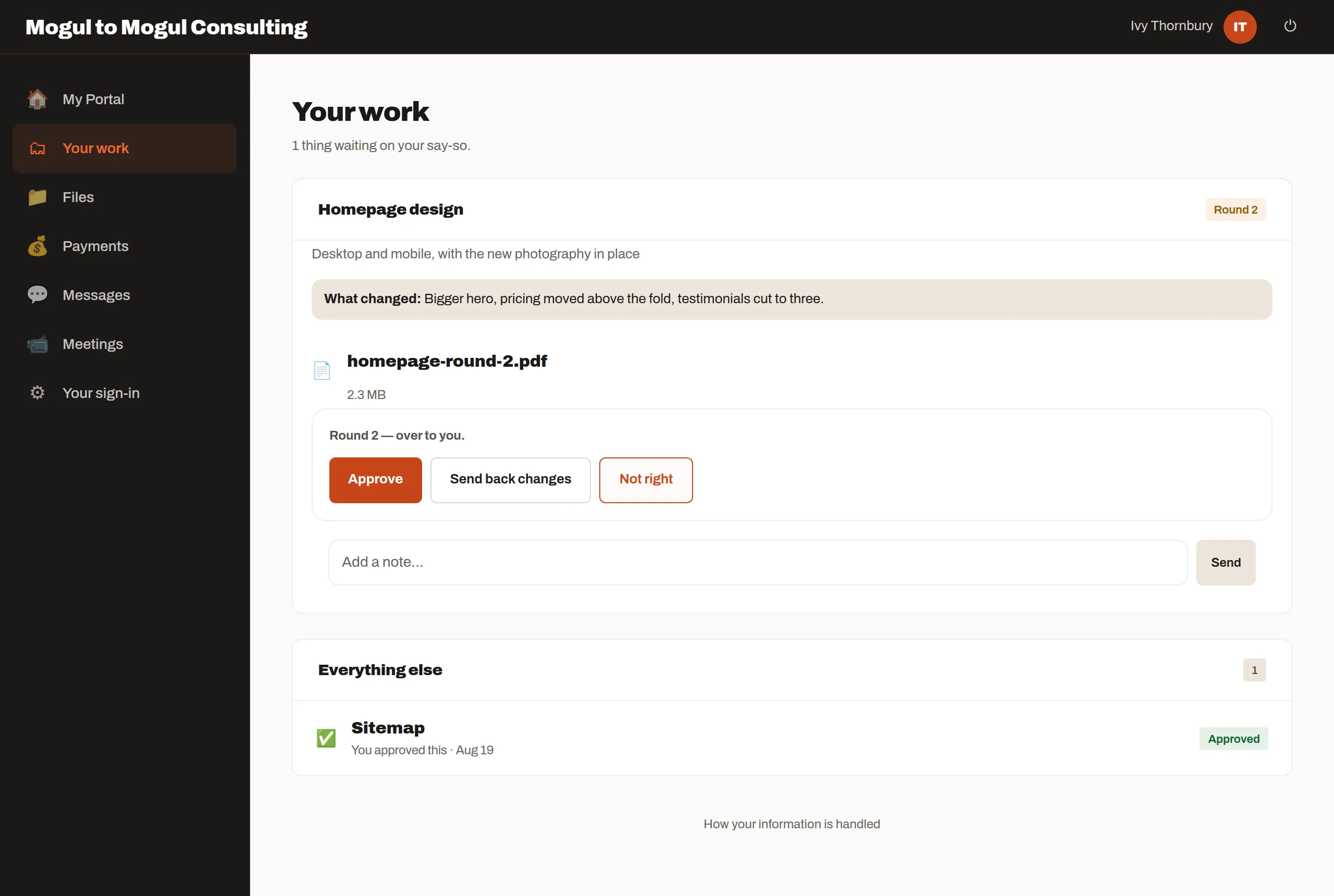
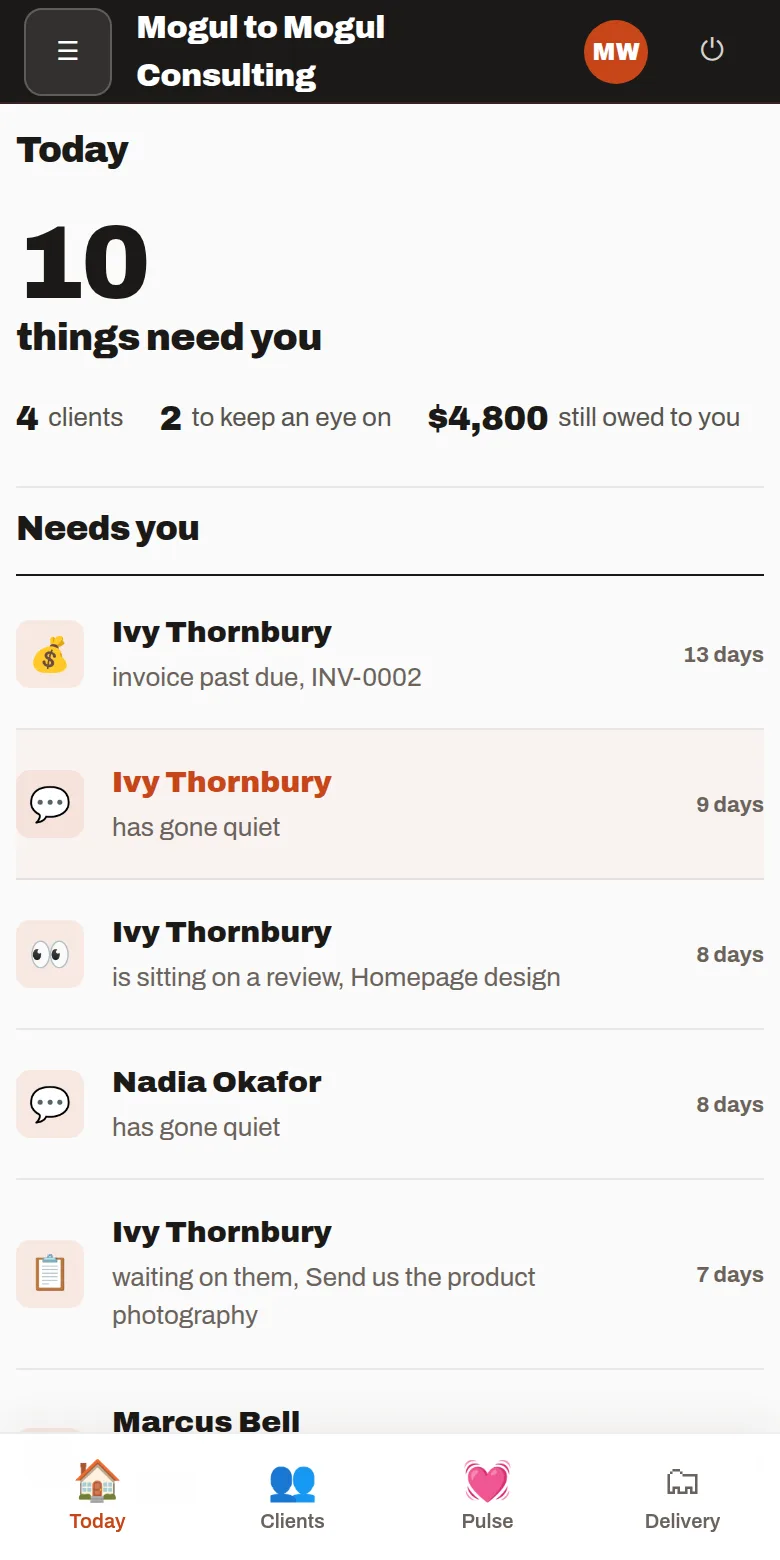
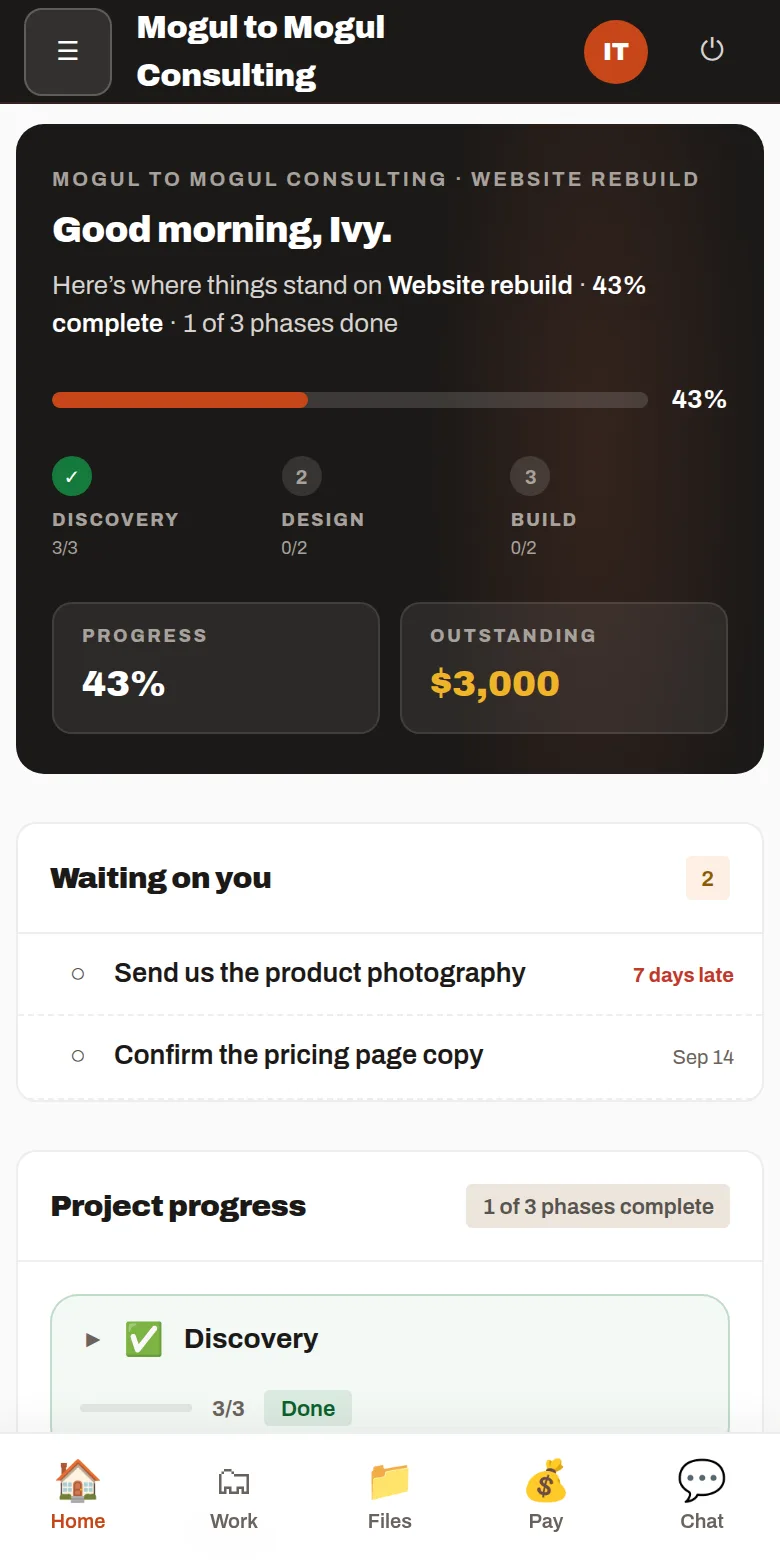
The same experience on a phone, from the client's side
Before we talk about what gets built

If any of this sounds like your Tuesday, keep reading.

01

You answer the same client question again, even though you know you’ve answered it before.

02

Somebody is waiting on you and you only find out because they followed up.

03

You’re looking for a file, link, invoice, contract, approval, or message you already sent.

04

A client finishes the work and nothing in the business asks for the testimonial, referral, renewal, or next step.

05

You’ve got tools. They just don’t work together in a way that feels clean.

06

You have support, and you’re still the person holding the whole thing open.

That’s what I mean when I say the business has outgrown the way it’s operating. The work can be good. The business can be established. The setup can still need to catch up.

That’s my week
What experience architecture looks like

Before we automate anything, I want to know what actually happens next.

When somebody pays you, where do they go? What do they see? What are they asked to do? Who knows they paid? What happens in the business because they paid? What happens if they don’t do the next step? What happens if you’re not sitting there to remember?

That’s the architecture. Once that’s clear, I can decide what should be automated, what needs a human, what belongs in a portal, what needs a workflow, what your client should see, and what your team or support people need behind the scenes.

The experience comes first.
The technology carries it.
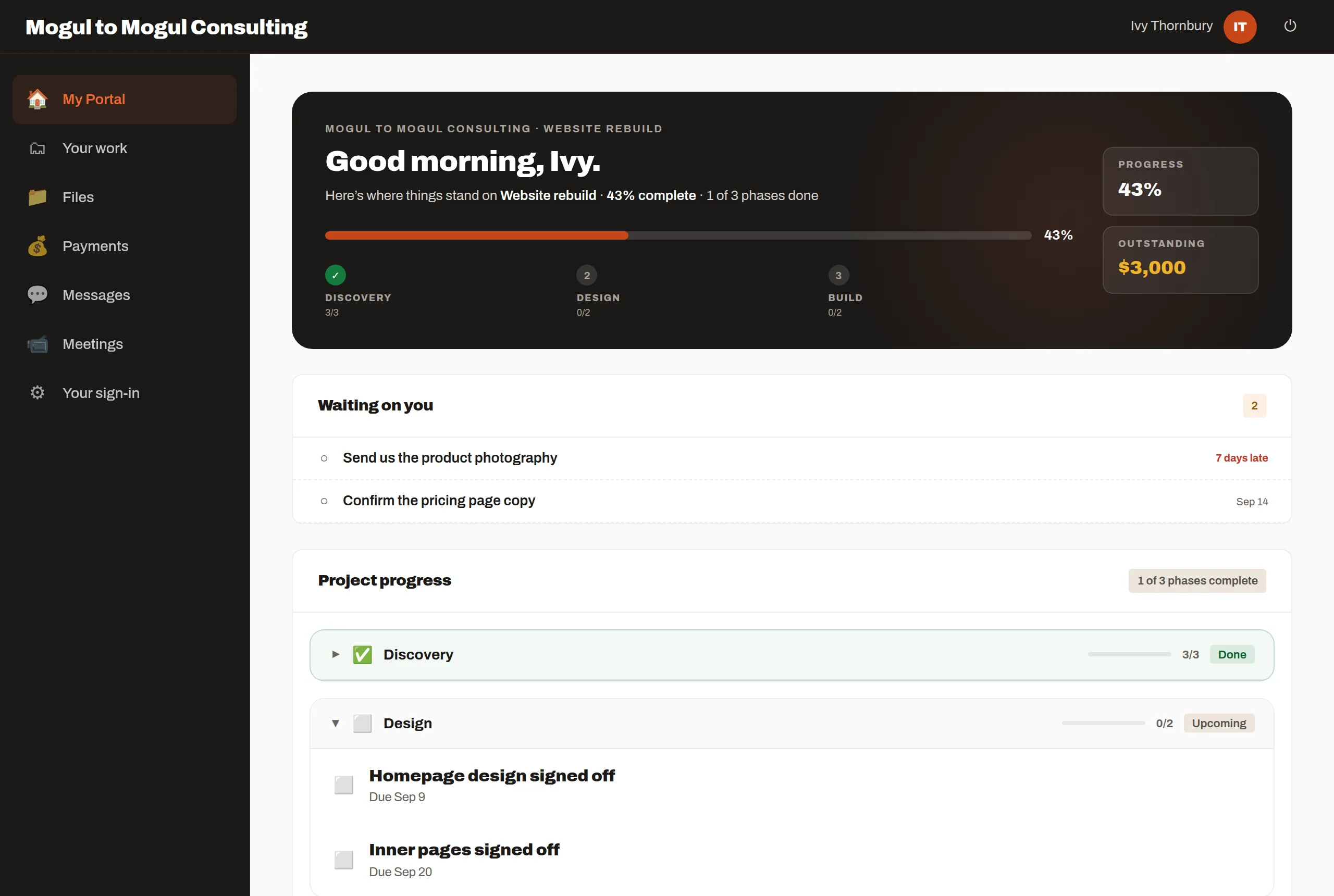
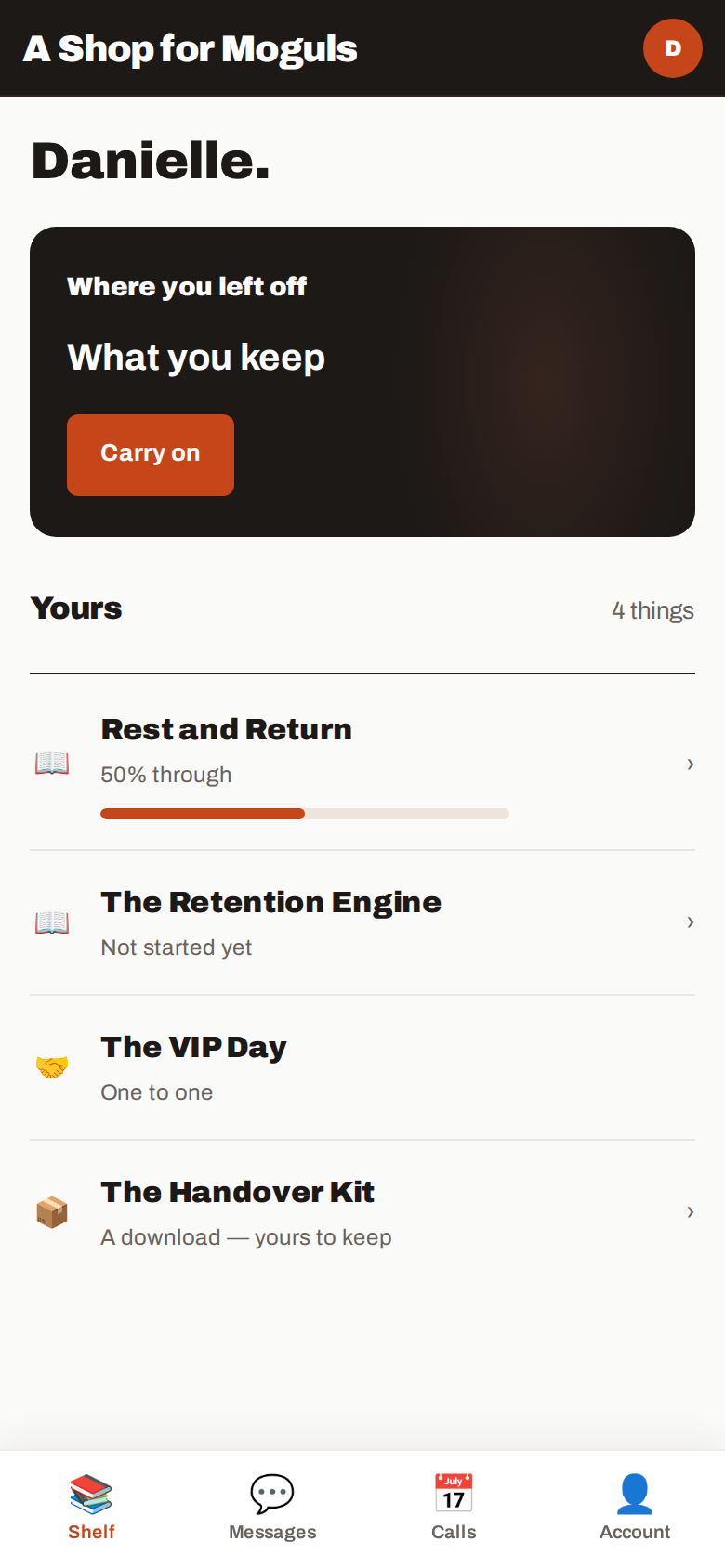
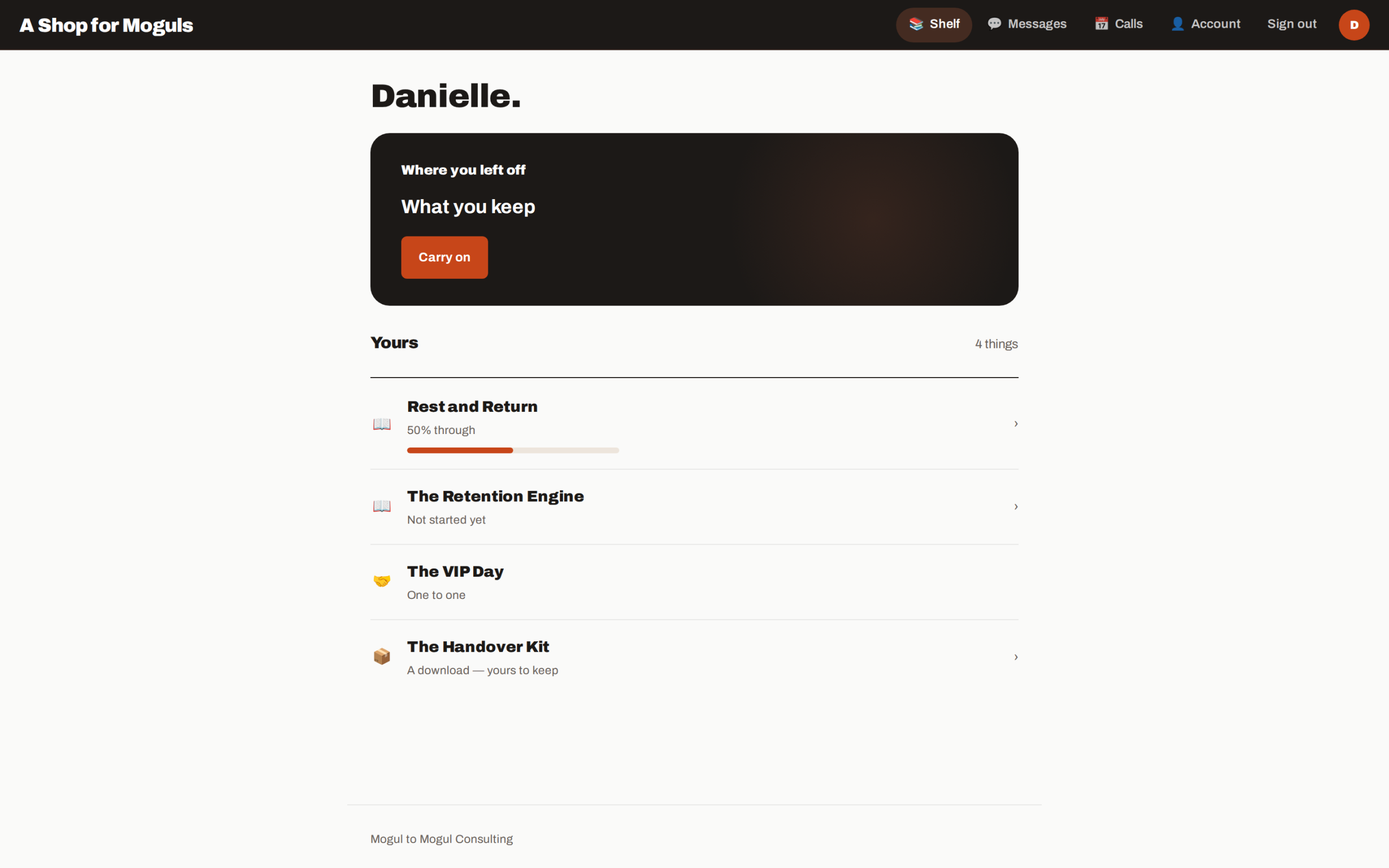
A branded client portal on the client's own domain, showing progress and what they owe
Solo Experience Build

You’re still the center of the business. You don’t need to be the system too.

You’re the owner. You’re the expert. You may have a VA, contractors, or outside support, and the business still runs through you. That’s normal for a solopreneur-led business. What I’m fixing is how much of the experience depends on you manually holding every piece together.

The Solo Experience Build gives the business a cleaner way to sell, onboard, communicate, deliver, follow up, and stay consistent without turning your business into some giant operation you never wanted.

This is for you if

You're still the center of the business, and you shouldn't have to be the system too.

You're the person selling, serving, approving, answering, and making sure things actually move.
You’ve got support, and most decisions and client-facing details still come back to you.
Your tools have accumulated over time and no longer feel like one clean operating setup.
Clients get good results, and the experience isn't as consistent or polished as the work itself.
You're doing manually what the business should already know how to do.
You're ready for a setup that can carry more clients without adding more unnecessary complexity.
What we build around

The full experience behind your solopreneur-led business.

This isn't limited to one isolated workflow. We look across the parts of the business that shape how clients move from interest to payment, delivery, completion, and what happens after.

Lead Capture Sales Flow Client Onboarding Client Communication Program + Service Delivery Client Portal Forms + Approvals Payments Follow-Up Retention Offboarding Testimonials Automations Connected Tools
What's included

Done-for-you setup, not another plan for you to implement later.

  • Full experience strategy and architecture
  • Complete setup and configuration
  • Migration from your current setup
  • Branded client-facing portal or environment where needed
  • Workflows and automations
  • Forms and client communications
  • Payment setup where relevant
  • Connected tools and integrations
  • Training and handoff
  • 30 days of launch support

The goal isn't to give a solopreneur more software to manage.

It's to build a smarter business around the way you actually work.

See the experience

Solo should still feel elevated.

Just because the business is owner-led doesn't mean the experience should feel pieced together. This build is meant to feel clear, polished, easy to move through, and easy to maintain.
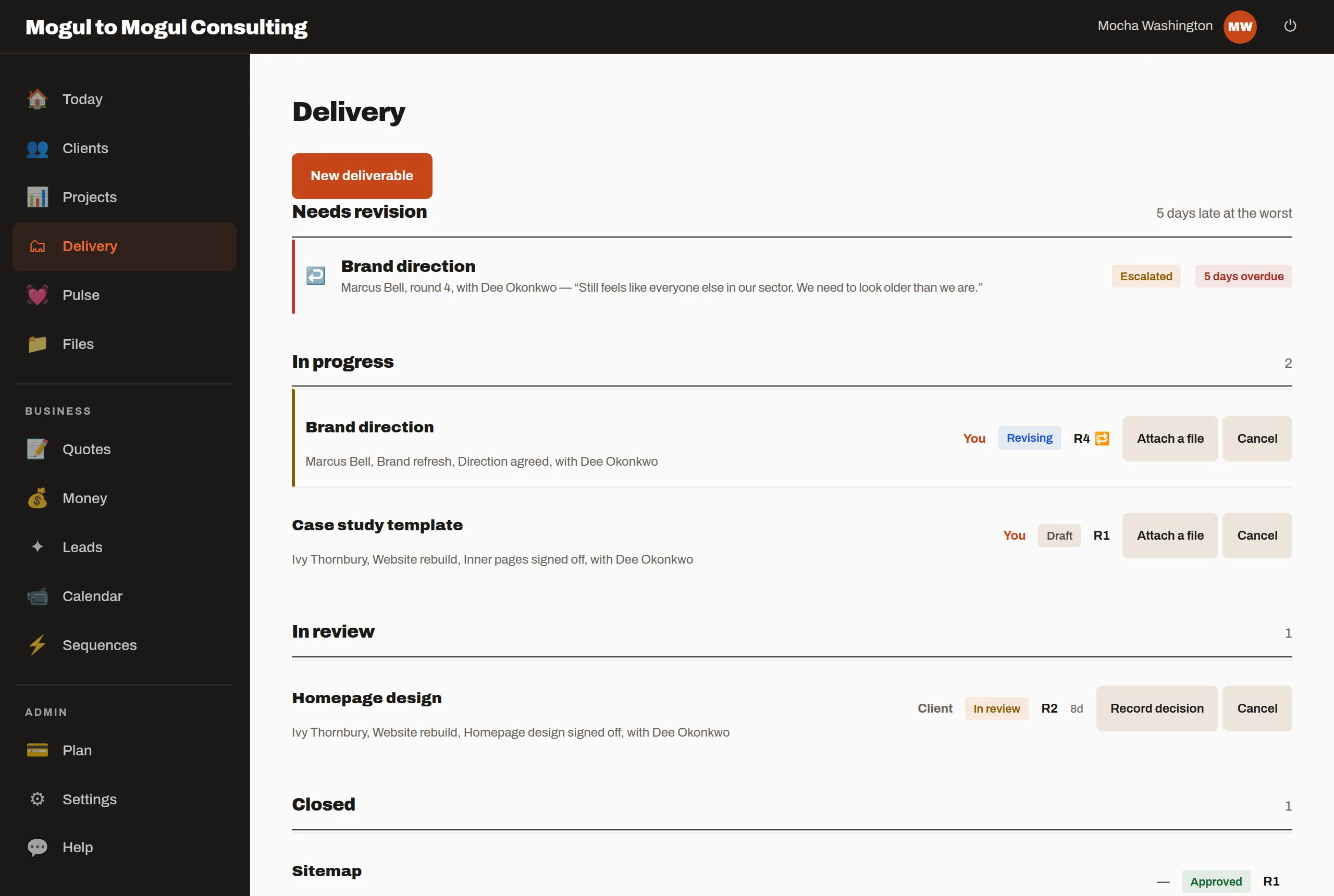
A delivery view showing which piece of work is sitting with which person
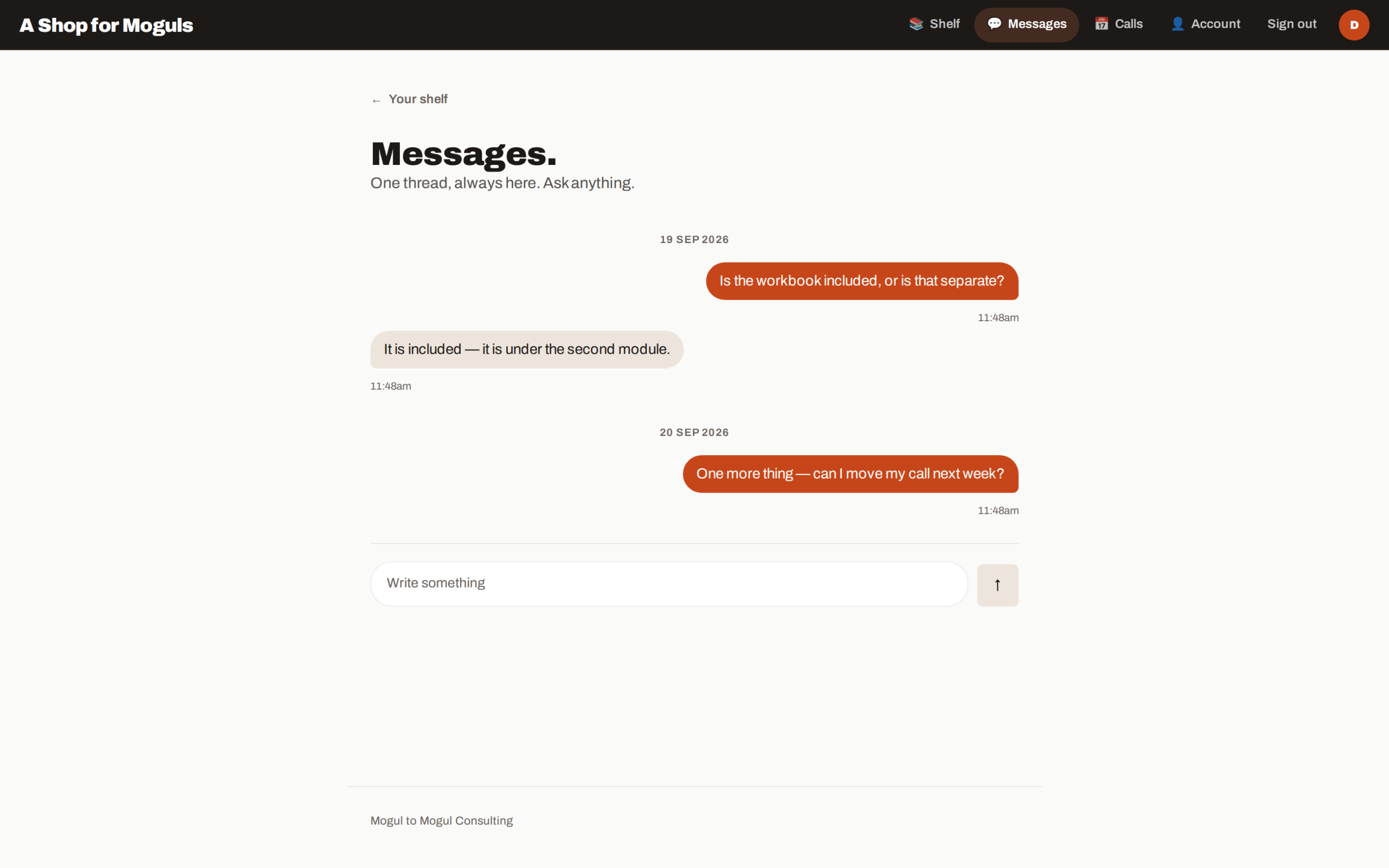
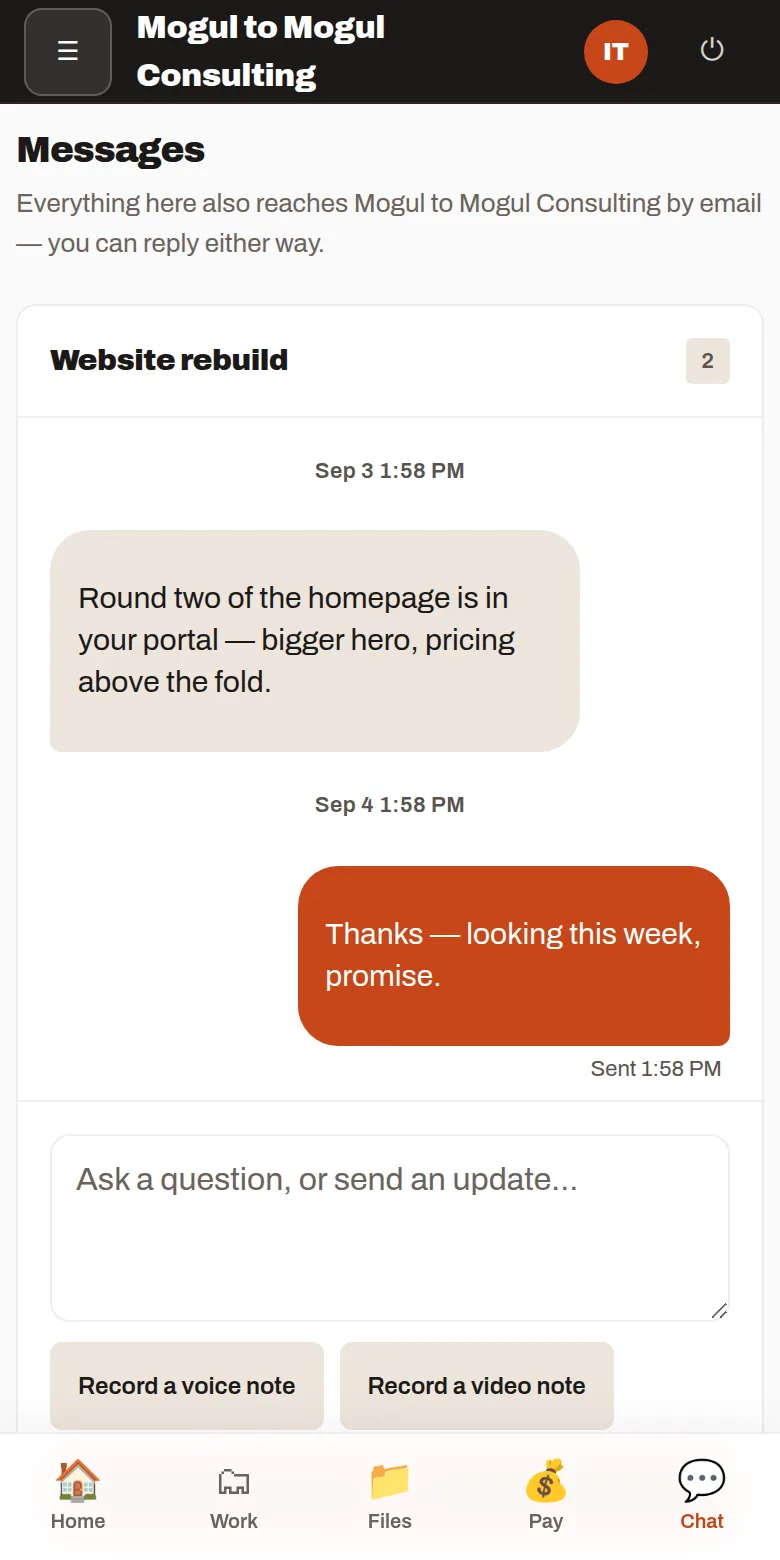
One message thread with both sides of the conversation, on a phone
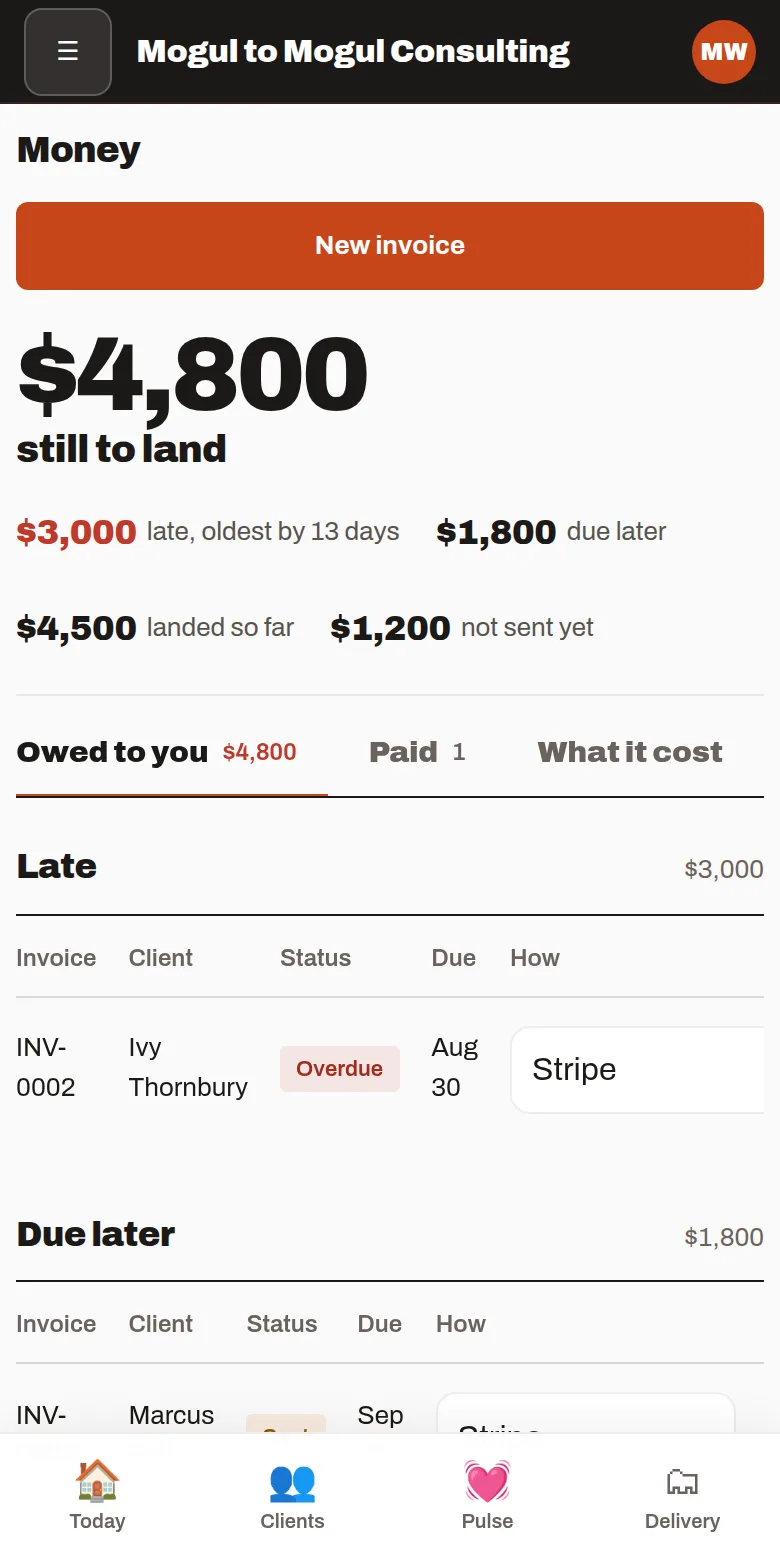
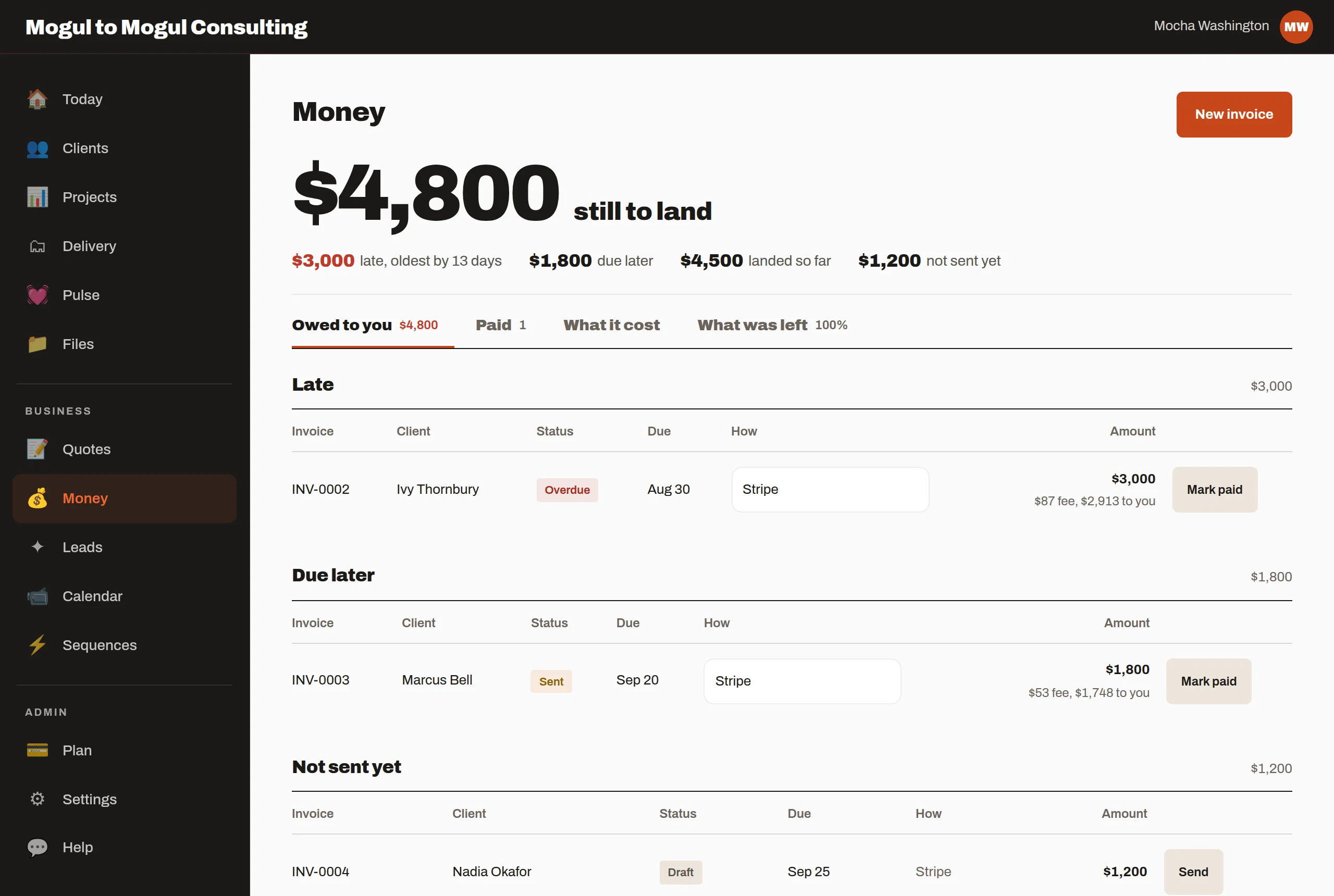
Invoices and what is still owed, on a phone
The business still runs through you.
The experience doesn't have to.

Think guided client movement, cleaner communication, stronger delivery, and a setup that feels intentional on desktop and on a phone.

The process

From the business you're running now to the setup that should have been there already.

01
Map

We map the client journey, your current tools, the work you still do manually, and where information or follow-up keeps depending on you.

02
Architect

I design how the experience should flow, what belongs where, what gets automated, and what still needs your personal touch.

03
Build + Migrate

I set up the environment, workflows, communication, and integrations, then migrate the agreed information from your current setup.

04
Launch

You learn how the new setup works and receive support while real clients begin moving through it.

What changes

You stay the face of the business without holding every moving piece together.

01

Clients know what's next.

The experience feels clear even when you aren't personally explaining every step.

02

Your business remembers for you.

Follow-up, communication, handoffs, and routine actions aren't living in your head.

03

Your setup finally matches your level.

The backend feels as considered as the work and service your clients already know you for.

Solo Experience Build

Ready for a business that doesn’t need you to hold every piece together?

Full setup, migration from what you’re using now, and 30 days of launch support while real clients move through it.

$3,500
Full setup + migration included
Buy the Solo Experience Build
When solo isn't the structure anymore

What happens when the experience has to work for more than you and the client?

That’s where the architecture changes

Multi-Experience Build

More people are moving through the business now. The experience has to account for all of them.

For businesses with multiple people, roles, programs, and experiences to connect. Your customer isn’t the only person the system has to support anymore.

You may have employees, contractors, leadership, programs, members, students, vendors, or multiple types of clients. Each person needs the right information, access, workflow, and experience.

That’s when the architecture gets deeper, because the experiences start affecting each other.

The real difference

It's not just more systems. It's more experiences that affect each other.

A Multi-Experience Build looks at how those experiences connect behind the scenes and builds the infrastructure that lets the business operate as one environment instead of a collection of separate systems.

01What does the customer need to see?
02What does the team need to know?
03What can contractors access?
04How do programs connect without becoming silos?
05Where does ownership change hands?
06How does information move without everything coming back to the owner?
This is for you if

Your business has multiple people, roles, programs, and experiences to connect.

Clients, team members, contractors, or leadership all need different views of the same business.
Programs, departments, or service lines are operating in separate systems and information keeps getting duplicated.
The handoff between sales, delivery, support, and follow-up has become its own problem.
Permissions matter because not everybody should see or control the same things.
You need one operating environment without forcing every person into the exact same experience.
You're building for growth and the current backend isn't designed to carry the next layer of the business.
What can be connected

One architecture. Different experiences where they're actually needed.

Your build is scoped around the people and experiences inside the business. That can include client-facing, internal, operational, educational, and contractor environments.

Client Experience Team Experience Contractor Experience Leadership Dashboards Program Delivery Membership + Community Learning Environments Sales + Onboarding Customer Success + Retention Internal Operations Permissions + Roles Automations + Handoffs Reporting + Visibility
More layers. More visibility.

Multi needs design and architecture.

Once multiple people, roles, programs, and experiences are involved, the environment has to do more than look good. It has to support access, ownership, visibility, delivery, and how information moves.
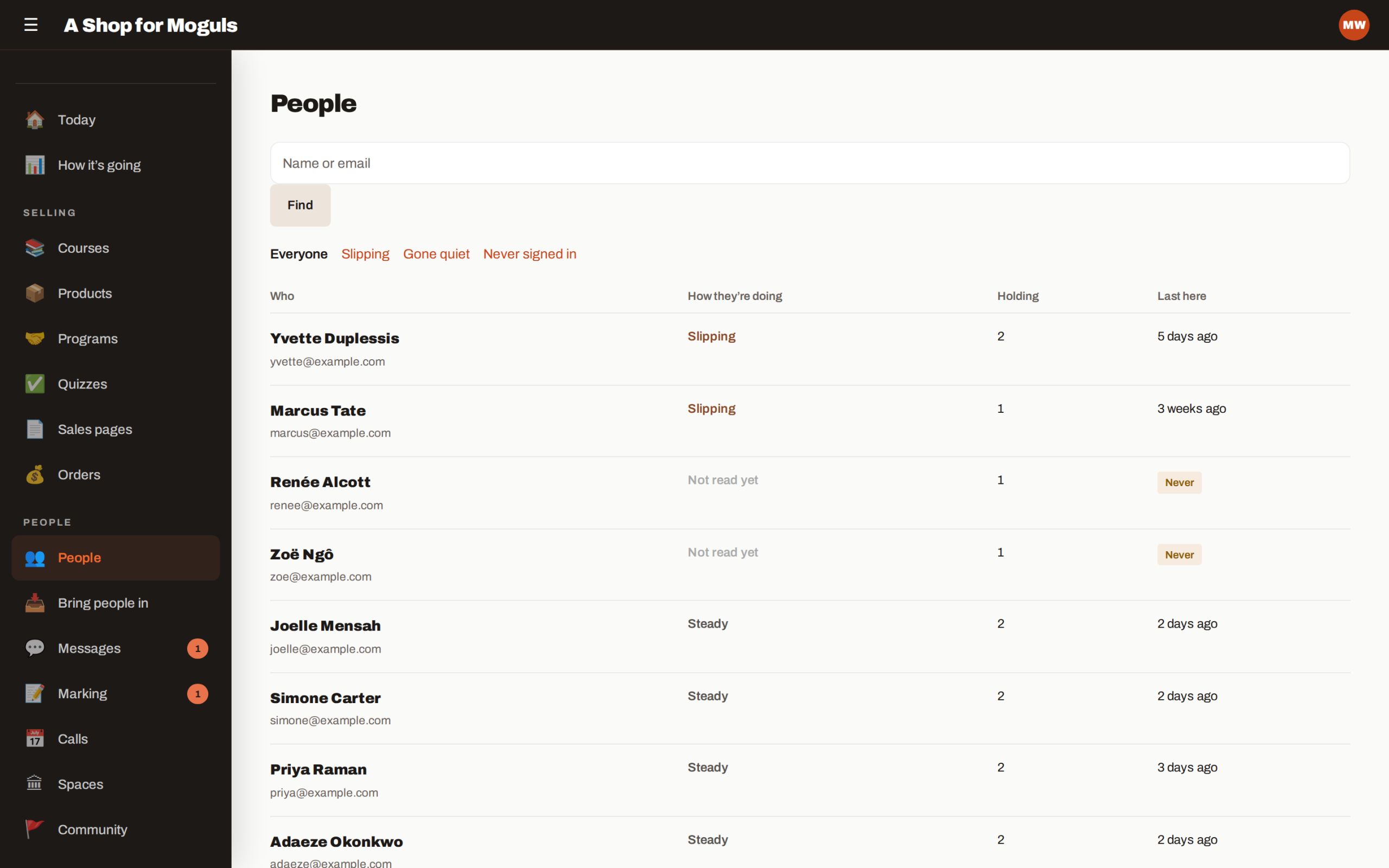
Everybody in the business in one view, with how engaged each person is
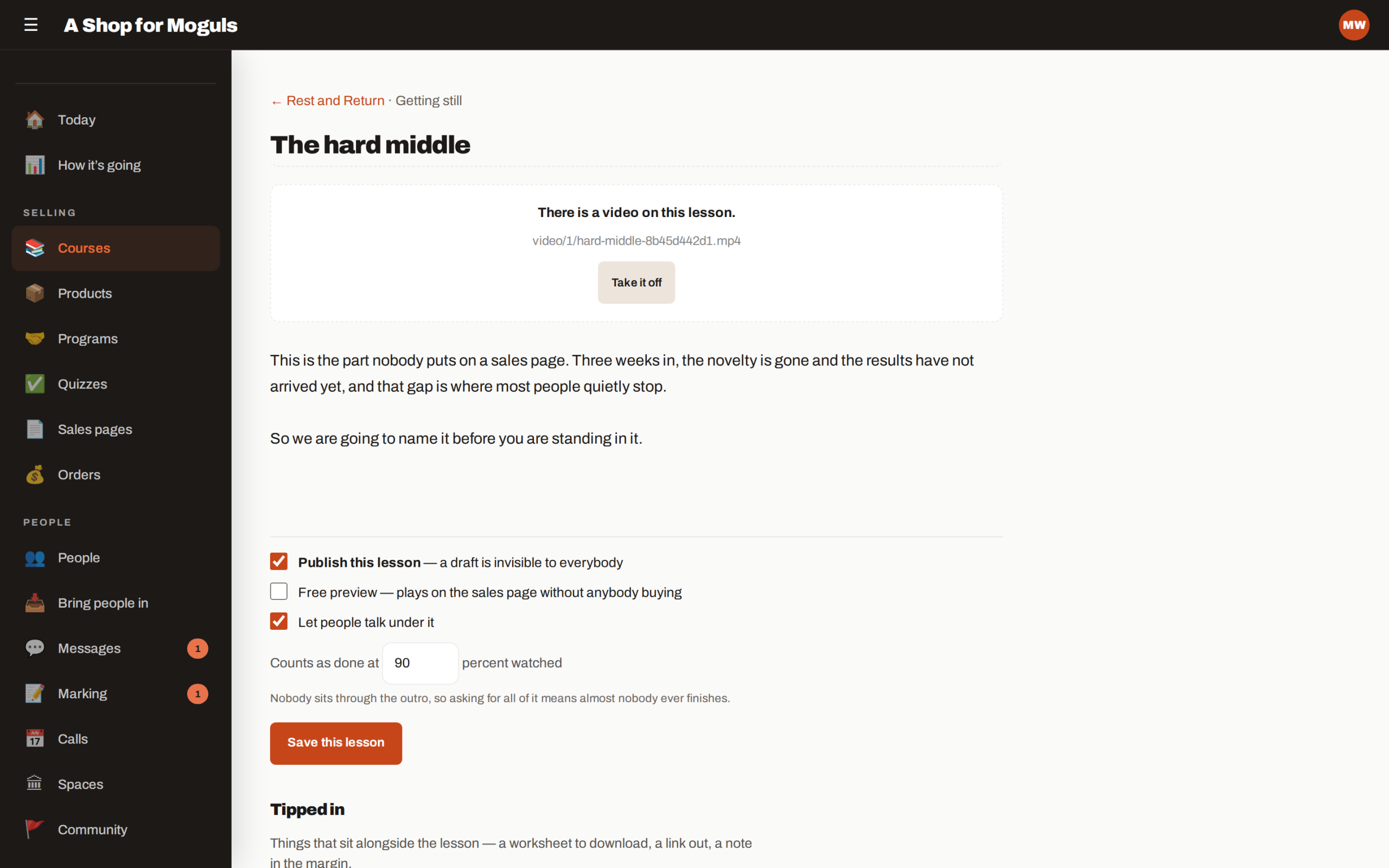
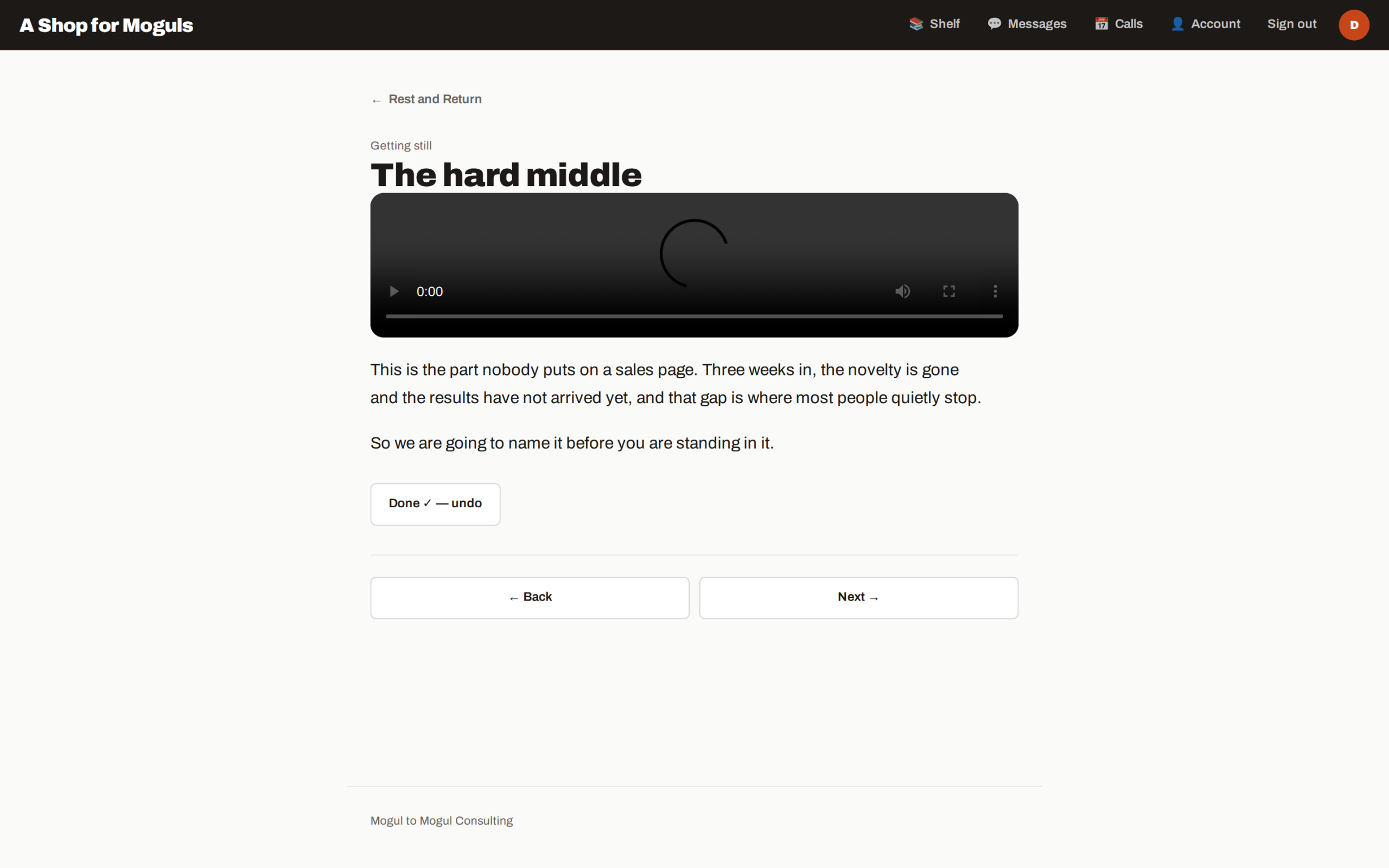
A lesson the way a member receives it, video and writing on one page
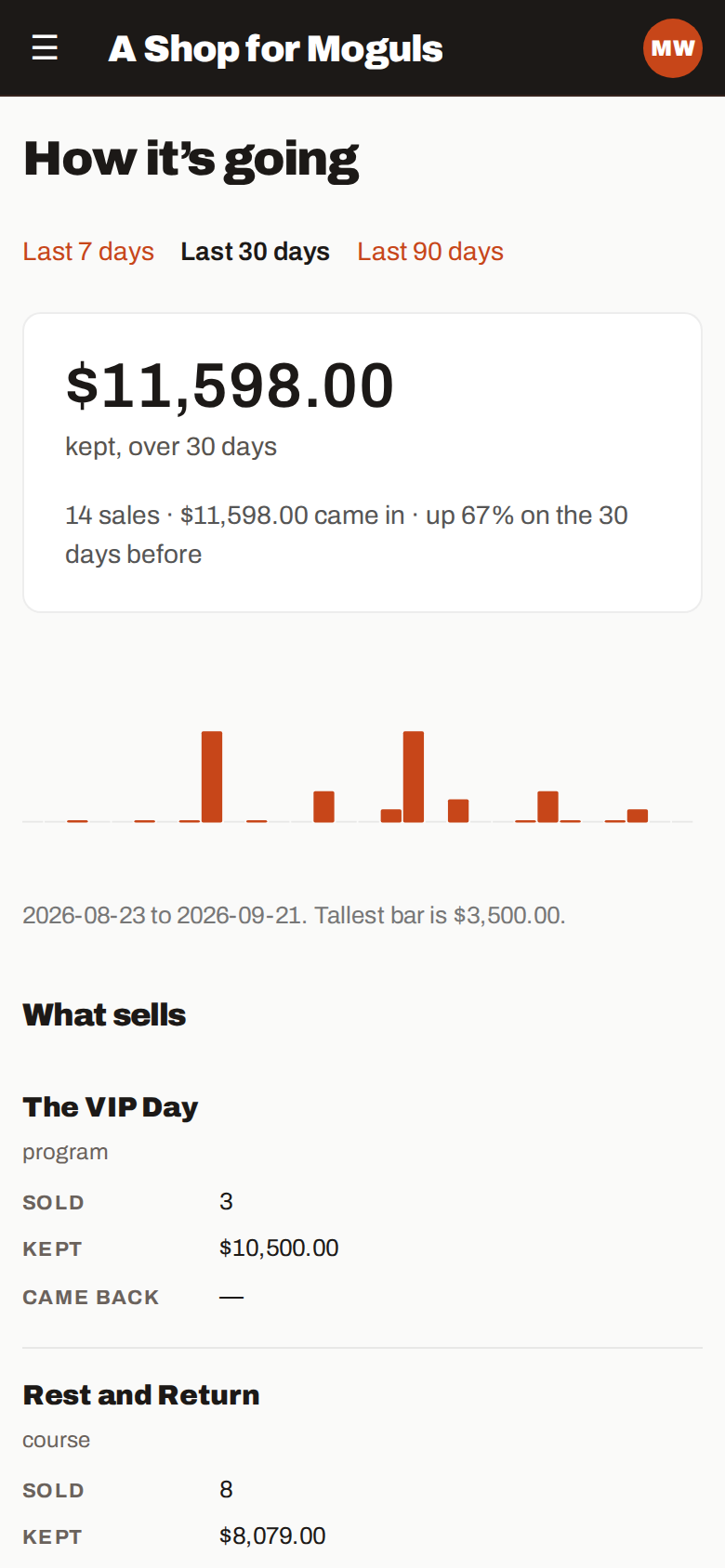
The numbers behind the business on a phone
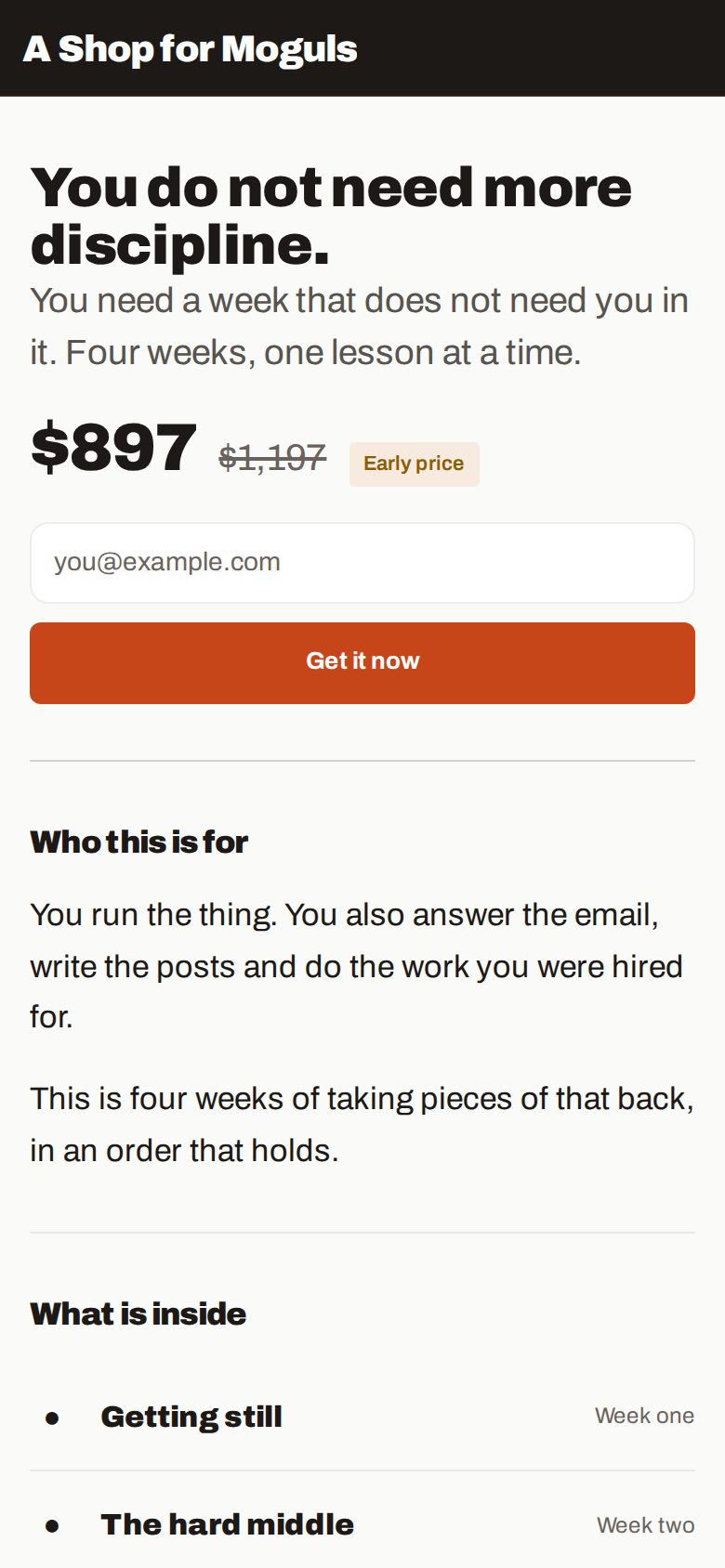
The public sales page as a buyer sees it on a phone
Different people can move through the same business
without getting the same exact experience.

This is where the build goes deeper. Internal visibility, program management, delivery infrastructure, permissions, communication flow, and experiences that support more than one type of user.

The process

We map the business before we build the environment.

01
Map

We map the people, roles, programs, experiences, workflows, tools, and handoffs already inside the business.

02
Architect

I design how everything should connect, including ownership, permissions, visibility, communication, and automation.

03
Build

We build the portals, dashboards, workflows, environments, integrations, and operating infrastructure the architecture calls for.

04
Test + Launch

We test the handoffs between experiences, train the people using the system, and roll the environment into the business.

What you walk away with

Infrastructure that understands the difference between the people using it.

  • Experience and operations architecture
  • Connected portals, dashboards, and workflows
  • Roles, permissions, and ownership structure
  • Automations and cross-team handoffs
  • Client, team, contractor, leadership, or program environments as needed
  • Custom forms, communication, and integrations
  • Documentation and training
  • 30 days of launch support

The goal isn't one giant system where everybody sees everything.

It's one connected environment where every person gets the experience they actually need.

How I architect the build

Software comes after we understand what the experience needs to do.

Customer

What are they seeing, feeling, waiting on, and needing next?

Business

Who owns what, where does information live, and how should the work move without unnecessary owner dependency?

Money

Where is the experience affecting conversion, payment, retention, repeat business, referrals, delivery costs, or revenue leakage?

I architect the experience behind the business.

Which build fits?

The difference isn't how many problems you have. It's the structure of the business we're building for.

Solo Experience Build
$3,500 · full setup + migration
Multi-Experience Build
From $5,000 · custom scoped
Sounds like

"The business is still built around me, and I need the experience and systems to carry more of the work."

"The business has multiple people, roles, programs, and experiences that need to work together."

Who moves through it

You and your clients, plus a VA or contractor here and there.

Clients, team, contractors, leadership, members, students, and programs.

The build

One connected client experience, set up and migrated for you.

Several connected experiences with roles, permissions, and ownership between them.

Scoping

Fixed. You know the number before we start.

Scoped around complexity, users, experiences, and integrations.

Both include

Strategy, architecture, build, training, and 30 days of launch support.

Strategy, architecture, build, training, and 30 days of launch support.

Multi-Experience Build

Think your business needs the deeper build?

Use the request form to tell me what's happening in the business, who the environment needs to support, what you're trying to build, and where things currently feel disconnected.

$5,000
Starting investment, scoped around people, roles, programs, and integrations
Request More Information
Mocha the Mogul

Your clients already know your work is good. Let’s make the experience feel like it belongs to the same business.

I’m looking for a setup that’s easier to move through, easier to operate, and strong enough to hold the way you want to grow.

Make It Happen
Mogul to Mogul Mocha Washington
Customer Experience Strategist